
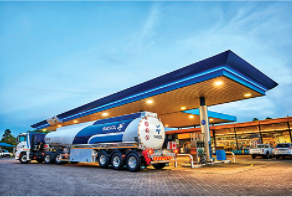
Sasol is a global chemicals and energy company. We harness our knowledge and expertise to integrate sophisticated technologies and processes into world-scale operating facilities. We safely and sustainably source, produce and market a range of high-quality products, creating value for stakeholders.

Through proprietary technologies and processes the main products Sasol produces are fuel components, chemical components and co-products. From these main products and further value-adding processes we deliver diesel, petrol (gasoline), naphtha, kerosene (jet fuel), liquid petroleum gas (LPG), olefins, alcohols, polymers, solvents, surfactants, co-monomers, ammonia, methanol, crude tar acids, sulphur, illuminating paraffin, bitumen and fuel oil. Even further processing produces numerous additional products.

Advancing chemical and energy solutions that contribute to a thriving planet, society and enterprise.

Sasol's investors consist of both equity investors (those invested in the Sasol ordinary shares or the ADRs) and lenders/debt investors (banks and institutional investors lending to Sasol or investing in its issues of debt instruments such as local bonds, offshore bonds, commercial paper issues, project finance, loans and other credit facilities and convertible instruments).

Supply Chain is the custodian of all external spend for the Sasol Group. It is responsible for managing supply and demand so as to ensure cost-efficiency and maximise return on spend, while at the same time ensuring effective logistics of a range of deliverables.

Explore existing opportunities to energise your career to the next level. Whether you are seeking a Learnership or you are Student or Graduate or Experienced Hire. Find out how you can add value to the Sasol Team.

Access media releases and view latest social media updates
| Category | Highlight Summary |
|---|---|
| Emissions Reduction Roadmap | An integrated approach to innovation and profitability continues to drive this optimisation, supported by strategic roadmaps that ensure regulatory compliance while unlocking resilient and attractive growth pathways. International Chemicals has reached a significant milestone in its commitment to reducing greenhouse gas emissions by entering into several biomethane purchase power agreements (BPAs) with CH4T and farmers, Italian producers of biomethane. |
| Emissions Performance | Sasol achieved an approximately 15% net reduction off the combined 2017 scope 1 and 2 baseline. Scope 3, Category 11, Sasol’s largest Scope 3 category, decreased by approximately 9% compared with FY25, and emissions from the use of sold products remained 24% below the 2019 baseline. |
| Low-carbon Operations | A key milestone in FY26 was the successful transition to low carbon steam generation at Natref, with all three low carbon boilers achieving beneficial operation and replacing coal derived steam supply. This transition supports compliance with evolving emissions standards, while delivering a meaningful reduction in greenhouse gas emissions. |
| Renewable Energy and Partnerships | This progress included the commercial operation of renewable energy projects, the building of a scalable power portfolio, the obtaining of an electricity trading licence, and the launch of market partnerships such as Ampli Energy. Milestones in sustainable products included ISCC+ certification for Renewable Diesel (RD), SAF, and certified monomers, along with commercial-scale production of RD and SAF. |
| Carbon Management | Sasol retired approximately 3,84 million carbon credits against its carbon tax obligation, supporting verified emissions-reduction projects and South Africa’s carbon market. Sasol continues to strengthen its carbon market capabilities to support future compliance, decarbonisation and value creation, with FY27 focused on expanding market participation and assessing strategic opportunities. |
| Biomethane Progress | International Chemicals continues to make progress toward its 2030 emissions reduction target through a revised portfolio of projects, including the United States VPPA concluded with Akuo in June 2025 and the biomethane purchase agreements implemented in Italy. |
| Climate Adaptation | Sasol made meaningful progress in strengthening its adaptation response and aligning with emerging global disclosure expectations. Sasol updated and expanded the climate change adaptation risk profiles across the Southern African value chains, with a specific focus on supply chain infrastructure, critical logistics corridors and key operational assets. |
| Policy and Disclosure | Sasol remains committed to ongoing collaboration with the DFFE as the carbon budget Sasol’s climate commitments are underpinned by science-based principles and demonstrate a clear level of ambition. |
| Sustainable Fuels and Products | Sustainable fuels and products have been de-risked through early-stage milestones, including ISCC+ readiness, progression of Sustainable Aviation Fuel (SAF) at Natref and the establishment of technology partnerships, creating credible development pathways. |
| Regulatory developments | South Africa’s air quality regulatory framework continued to evolve during the reporting period, increasing both compliance complexity and implications for the company’s integrated operations. The revised Highveld Priority Area Air Quality Management Plan was gazetted, introducing strengthened emission reduction requirements for both Sasol Mining and Secunda Operations. |
| Gas strategy execution | The PSA project achieved important operational milestones, with the Integrated Processing Facility (IPF) reaching beneficial operation in March 2026 following a revised execution timeline. |