



-
Who We Are
Overview
Sasol is a global chemicals and energy company. We harness our knowledge and expertise to integrate sophisticated technologies and processes into world-scale operating facilities. We safely and sustainably source, produce and market a range of high-quality products, creating value for stakeholders.
-
Our Businesses
Overview
Through proprietary technologies and processes the main products Sasol produces are fuel components, chemical components and co-products. From these main products and further value-adding processes we deliver diesel, petrol (gasoline), naphtha, kerosene (jet fuel), liquid petroleum gas (LPG), olefins, alcohols, polymers, solvents, surfactants, co-monomers, ammonia, methanol, crude tar acids, sulphur, illuminating paraffin, bitumen and fuel oil. Even further processing produces numerous additional products.
-
ESG
Overview
Advancing chemical and energy solutions that contribute to a thriving planet, society and enterprise.
-
Investor Centre
Overview
Sasol's investors consist of both equity investors (those invested in the Sasol ordinary shares or the ADRs) and lenders/debt investors (banks and institutional investors lending to Sasol or investing in its issues of debt instruments such as local bonds, offshore bonds, commercial paper issues, project finance, loans and other credit facilities and convertible instruments).
-
Suppliers
Overview
Supply Chain is the custodian of all external spend for the Sasol Group. It is responsible for managing supply and demand so as to ensure cost-efficiency and maximise return on spend, while at the same time ensuring effective logistics of a range of deliverables.
-
Careers
Overview
Explore existing opportunities to energise your career to the next level. Whether you are seeking a Learnership or you are Student or Graduate or Experienced Hire. Find out how you can add value to the Sasol Team.
-
Media Centre
Overview
Access media releases and view latest social media updates
Concrete Chemicals receives €350 Million funding for Germany’s largest industrial-scale e-SAF plant
Concrete Chemicals receives €350 Million funding for Germany’s largest industrial-scale e-SAF plant
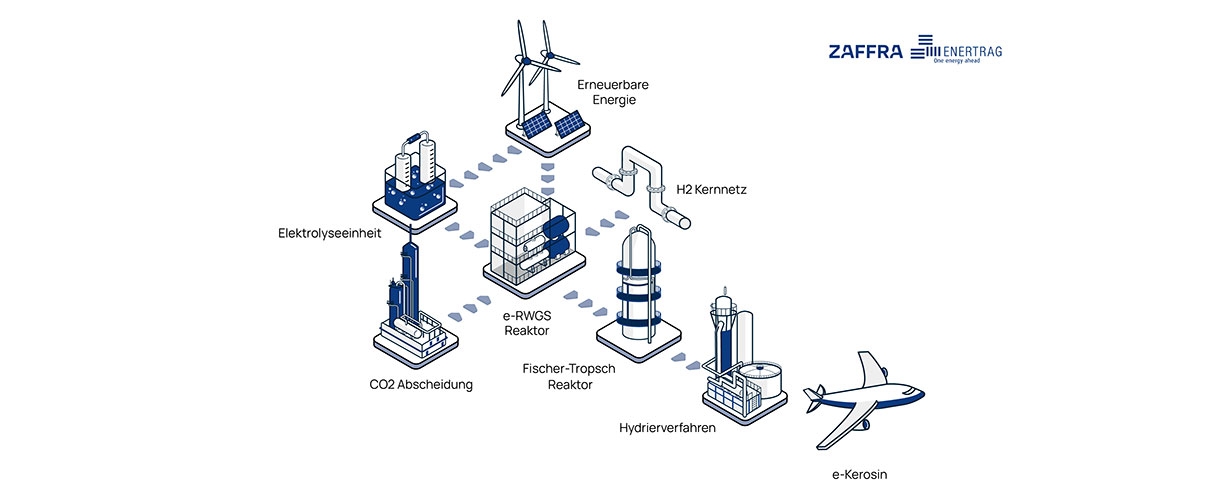
Berlin/Amsterdam – Concrete Chemicals GmbH has secured €350 million in public funding, to realise the largest industrial-scale production facility for Electro-Sustainable Aviation Fuels (e-SAF) in Germany. The funding has been approved at national and regional level, with the European Commission review now in its final phase. Under the Climate Energy and Environmental Aid Guidelines (CEEAG) framework, this funding is aimed at accelerating the build-out of a competitive clean hydrogen economy, while boosting the EU’s energy sovereignty.
This strategic project represents a major industrial milestone on the path to decarbonising European aviation, marking a turning point in the race to meet climate targets in the transport sector. The announcement highlights Germany’s and Brandenburg’s commitment to strengthening domestic e-SAF production capacity, with the project planned in Schwedt as an industrial location.
As a cornerstone of the EU’s energy and climate strategy, Concrete Chemicals directly supports the blending mandates defined in the ReFuelEU Aviation Regulation. The project demonstrates how innovation, renewable energy, and climate policy can be tightly integrated to support the long-term development of European aviation fuel supply chains, while contributing to regional economic development and high-value industrial jobs.
Using biogenic CO₂ and renewable hydrogen, Concrete Chemicals will produce synthetic kerosene through a Power-to-Liquid (PtL) process. The consortium plans to source local CO₂ through a cooperation with LEIPA Leinfelder GmbH, a leading manufacturer of recycled paper and cardboard products based in Schwedt. The planned production capacity of more than 37,000 tonnes (30,000 tonnes of e-SAF and 7,000 tonnes of e-naphtha) per year is expected to result in an annual reduction of at least 100,000 tonnes of fossil CO₂ for the aviation industry.
“With Concrete Chemicals, we are showing that the energy transition does not stop at electricity — it is now taking off in the skies,” said Dr. Gunar Hering, CEO at ENERTRAG. “Our expertise in renewables enables the cost-efficient use of green hydrogen to power the aviation fuels of the future.”
The project is designed in alignment with Germany’s emerging hydrogen infrastructure planning and the objectives of the IPCEI hydrogen framework. Its location and system design allow for future connection to the national Hydrogen Core Network (“H₂-Kernnetz”), subject to the completion of relevant infrastructure and regulatoryapprovals, supporting scalability and long-term integration into the European hydrogen market. The project will improve the resilience of Germany and Europe’s energy sector, making the country more resilient to future shocks.
This initiative delivers measurable impacts at both the EU and German state level. It will support the delivery of the EU blending sub-mandate on e-SAF (starting at 1.2%) in 2030, while playing a vital role in fulfilling EU climate targets. It will support the 55% reduction in GHG emissions by 2030 and full climate neutrality by 2050. The initiative will contribute to the German Federal Government’s Sustainable Aviation Strategy and support the delivery of the German government’s blending requirements for e-SAF under ReFuelEU in 2030.
“Zaffra and its partners are delivering the kind of frontier industrial innovation Europe urgently needs,” said Jan Toschka, CEO of Zaffra. “This project proves that it is possible to marry innovation with energy resilience, climate ambition, and economic competitiveness - all with European technology, German infrastructure, and Brandenburg-based jobs”.
The technical planning phase begins immediately, with a final investment decision targeted by 2027 and production expected to support the 2030 mandates. Concrete Chemicals GmbH includes ENERTRAG and Zaffra - combining leading expertise in renewable energy, green molecule production and industrial decarbonisation. The partners are setting the standard for a replicable SAF blueprint, ready to be rolled out at scale, across Europe and beyond.